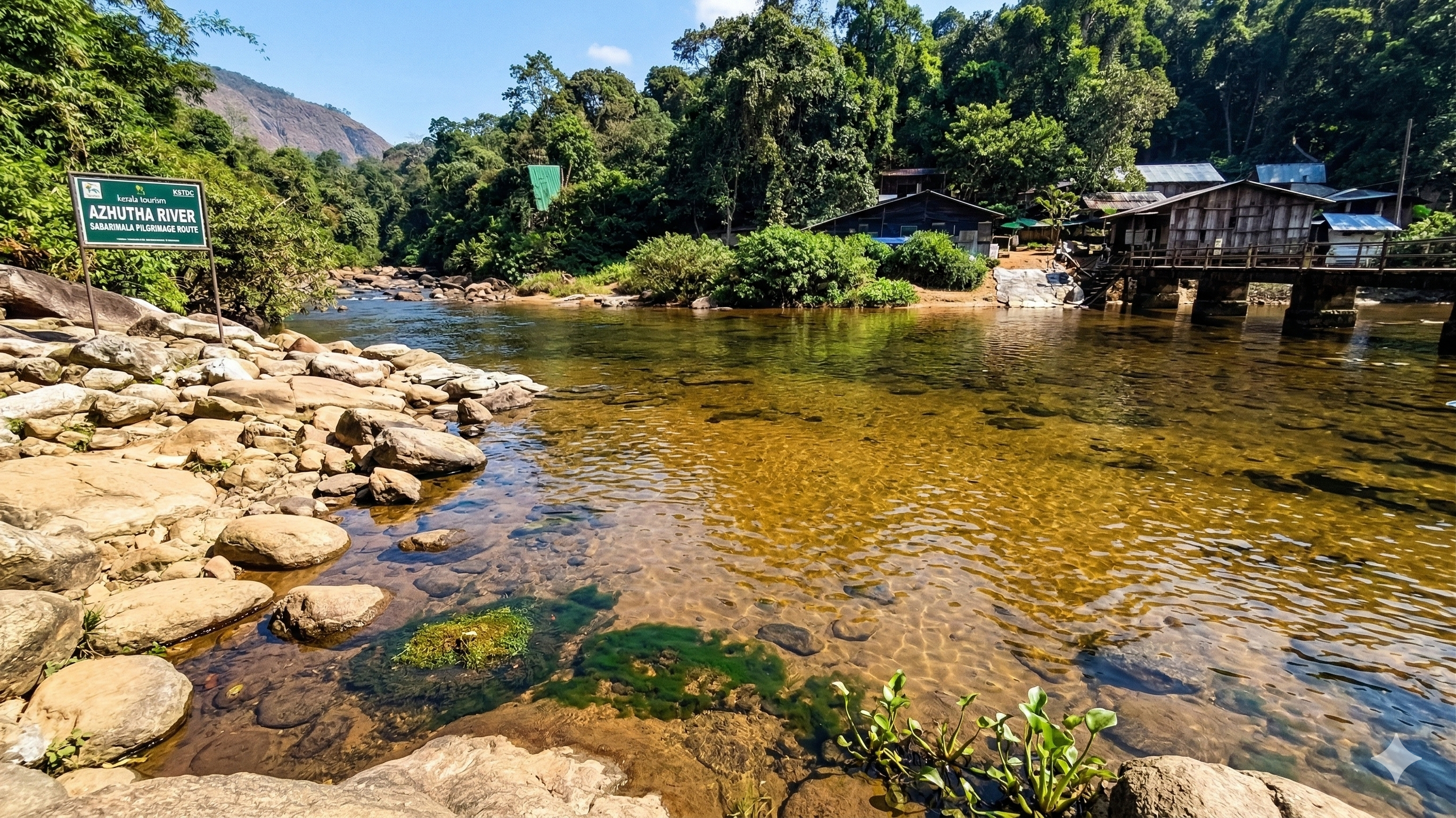
Azhutha River on the forest pilgrimage route, remembered by devotees as a place of purification and inner release.
Azhutha River is remembered as a river of release, where pilgrims renew humility and prepare for the demanding forest stages ahead.
On the traditional Erumeli path, Azhutha River is remembered as a sacred tributary connected to the long forest yatra. Devotional memory treats this crossing as a point of inner lightness before the more strenuous climbs.
Pilgrims often associate the river with the practice of taking a holy dip and carrying a pebble onward, symbolizing the burdens that must later be cast away at Kallidumkunnu.
Approach the riverbank calmly, keeping the group together and your Irumudi secure. Do not rush into water movement just because others are moving.
If your Guruswamy permits and the local conditions are safe, take the holy dip with remembrance and respect for the current, stones, and crowd flow.
Pick only a small pebble from the riverbed, keep it with devotional seriousness, and remember that it is meant for later surrender rather than casual handling.
First-time pilgrims should understand from their Guruswamy why the pebble is taken and what inner burden it represents before participating in the practice.
New devotees can get delayed easily at river crossings. Stay close to your group leader and fix a visible regrouping point before entering the riverbank area.
Wet stones, fatigue, and crowd movement can unsettle first-time pilgrims. Move carefully, keep a dry cloth ready, and resume the trek only after regaining balance.