Swami SharanamMakarajyothi Guide Back To Home
Makara Sankranti Climax

Makarajyothi and Makaravilakku: the celestial sign, the ritual flame, and the safe way to receive both

This is the most emotionally charged moment of the Sabarimala season. For devotees, the best service is clarity: Makarajyothi and Makaravilakku happen together, but they are not the same event. One is celestial, one is ritual, and the sacred power of the evening lies in their union with Deeparadhana and Thiruvabharanam Darshan.

Makarajyothi vs. Makaravilakku

Makarajyothi

A natural celestial phenomenon traditionally identified with the star Sirius. Devotees receive it as the divine sign that appears in the sky when the evening Deeparadhana begins.

Makaravilakku

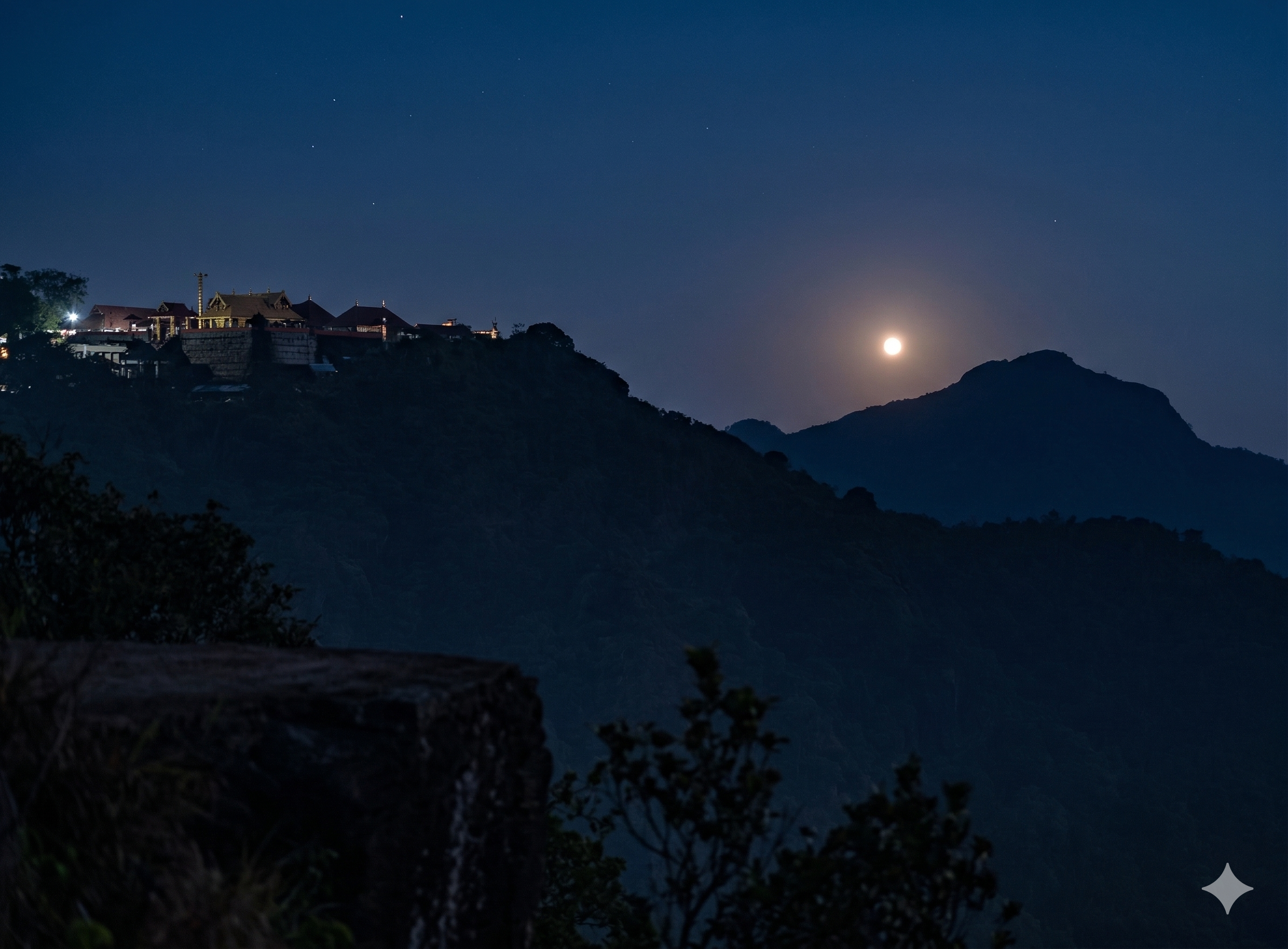
A ritual flame lit on Ponnambalamedu using camphor and ghee. It is shown three times in quick succession and forms part of the inherited Makara Sankranti observance.

The sacred moment of union

The strongest pilgrim experience comes when the Thiruvabharanam reaches the Lord, Deeparadhana begins, the Jyothi is seen in the sky, and the Vilakku is shown on the hill.

Comparison for pilgrims

FeatureMakarajyothiMakaravilakku
OriginCelestial and naturalRitual and traditional
PositionHigh in the sky or horizon lineOn the Ponnambalamedu peak
IdentificationSiriusCamphor flame shown as aarti
ActionAppears onceShown three times
Spiritual readingDivine presenceDivine worship from the sacred hill

Top viewpoints for Makaravilakku sighting

1. Sannidhanam

The most sacred and most congested choice. The north and north-east sides near Malikappuram and Manimandapam give the direct line toward Ponnambalamedu.

Pros: Deeparadhana sound, bells, and temple atmosphere.

Cons: Extreme crowding; many devotees secure a place 6 to 10 hours in advance.

2. Saramkuthi

An elevated option roughly 1 kilometre before the Sannidhanam. It gives breathing room and a faster start for descent after the sighting.

Pros: Clear horizon and easier exit.

Cons: You will not see the physical Thiruvabharanam entry into the temple.

3. Sabaripeedom

The plateau after the steep Appachimedu climb. It is quieter, spiritually rich, and useful for devotees who want a calmer vantage point.

Pros: Lower crowd pressure and a wider mountain view.

Cons: The sound of temple ritual may not carry clearly.

4. Pullumedu

The closest regulated public line of sight toward Ponnambalamedu, approached through the Vandiperiyar and Sathram side.

Pros: Strong visual clarity of the flame.

Cons: Entry is tightly controlled by the Forest Department and conditions are cold and remote.

5. Pamba and Chalakkayam

The base-camp alternative for elderly pilgrims, families, and devotees who cannot make the upper climb.

Pros: Easier access and simpler regrouping.

Cons: The light appears smaller and more distant.

Supplemental inner-temple option

Malikappuram premises often provide a workable line of sight when Sannidhanam itself is too compressed. It remains one of the best secondary choices inside the upper complex.
Viewfinder map

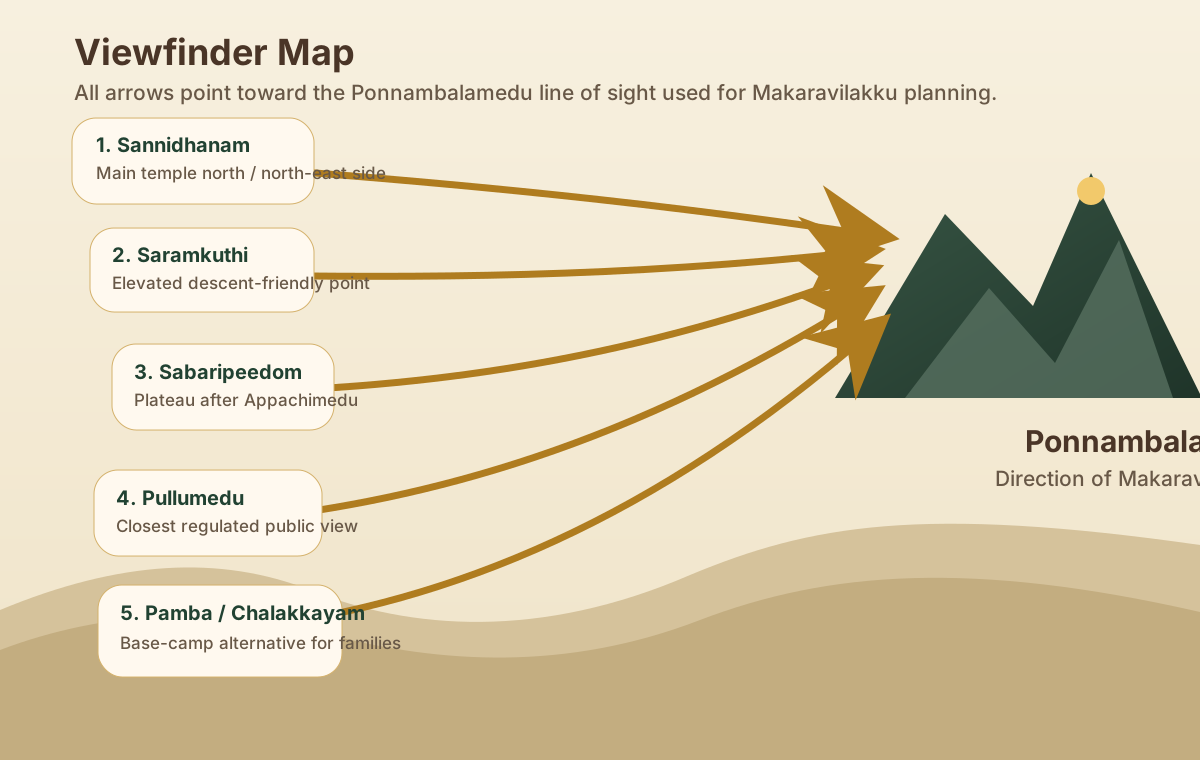
For first-time pilgrims, the most important orientation detail is that the sighting line from the upper temple side is toward the east / north-east direction. This simple diagram shows how the common public viewpoints align toward Ponnambalamedu.

Simple viewpoint map showing Sannidhanam, Saramkuthi, Sabaripeedom, Pullumedu, and Pamba aligned toward Ponnambalamedu

Viewpoint comparison

LocationApproximate distance to hillCrowd levelEase of exit
Sannidhanam~4 kmExtremeDifficult
Malikappuram~4.2 kmHighModerate
Saramkuthi~5 kmModerateEasy
Sabaripeedom~6 kmLowVery easy
Pullumedu~2 kmControlled entryRequires trekking discipline

Krishnaparunthu: the divine messenger of the hills

For devotees, the Krishnaparunthu is not merely a bird. It is revered as Garuda, the vahana of Lord Vishnu, and is received as the heavenly witness to the most important moments of the season.

Why the sighting matters

Tradition says the Thiruvabharanam procession from Pandalam begins only after the bird is seen circling the Valiyakoikkal Temple, as though the Lord himself has granted consent for the journey.

Three beloved milestones

Devotees especially watch the sky at Pandalam departure, along the forest route, and again near Saramkuthi and Sannidhanam on Makara Sankranti evening.

Harihara symbolism

Because Lord Ayyappa is Hariharaputra, the presence of Vishnu's bird at a Shaiva-aligned shrine becomes a living symbol of unity between major streams of devotion.

Krishnaparunthu or Brahminy Kite associated with the Thiruvabharanam procession

Ponnambalamedu and the ritual flame

Ponnambalamedu remains one of the most discussed places in the sacred geography of Sabarimala. It lies within the protected Periyar Tiger Reserve and is not open to general public trekking.

Mythological memory

It is remembered as the golden hill-shrine where Devas and Siddhas once performed worship for Lord Ayyappa, with deep links to the Malayaraya tradition.

Why pilgrims must not attempt entry

The area is a protected forest core zone. Security, ecology, and ritual order all depend on devotees receiving the hill from afar rather than trying to trespass toward it.

Ponnambalamedu hill associated with the Makaravilakku ritual

Post-Makaravilakku: the safe exit strategy

The Golden Two-Hour Rule

Between about 7:00 PM and 9:00 PM, the urge to descend all at once creates the most dangerous crowd pressure. If police and field staff permit, remain in your viewing zone or a safe shed for about two hours before you start down.

Choose the right descent route

Swami Ayyappan Road is wider and easier for elderly pilgrims, families, and devotees with knee or balance problems. The traditional path is faster but steeper and much harsher after a full day of standing.

Accept police diversions immediately

During rush hours, one-way route control is used to prevent dangerous head-on crowd collisions. If police redirect you, adjust early and keep your group together.

Transport, regrouping, and hydration after the sighting

KSRTC chain services

Hundreds of buses move between Pamba and Nilakkal during the high-rush phase. There is rarely value in pushing for the first bus and creating additional fatigue or panic.

Nilakkal parking memory

Group leaders should save the exact parking ground and sector before the climb. Night regrouping becomes difficult when devotees remember only “Nilakkal” and not the actual sector.

Driver rest

If you are returning by private vehicle, ensure the driver has rested properly before the ghat-road return. Fatigue accidents increase when the driver also completed crowd duty or long queue duty.

Health after descent

Even in cool weather, the descent dehydrates. Drink electrolyte water, avoid sudden cold shock if the muscles are cramped, and let the end of the Vratham happen with calm rather than haste.

January 14, 2026 planning note kept on this page

Reference pointPlanning note
DateWednesday, January 14, 2026
SankramapoojaApproximately 3:13 PM
Thiruvabharanam arrivalApproximately 6:00 PM to 6:30 PM
Expected sighting windowShortly after evening Deeparadhana, typically around 6:30 PM to 7:00 PM

Planning note: this is preserved as the 2026 archival reference. Any future Makara Sankranti season should be checked again against official orders because crowd-control, route access, and field timings can change.