Swami SharanamPilgrim Care GuideBack To Home
Pilgrim Care

One care guide for first-timers, elders, children, and family groups

Use this page to prepare the practical care side of the yatra: hydration, regrouping, fatigue signs, safe pacing, document readiness, and respectful movement through crowded sectors.

Open First-Time Guidance Open Irumudi Guide

Care before you begin the route

Settle documents first

Keep darshan confirmation, government ID, medicines, emergency contacts, and at least one offline screenshot or printout ready before entering Nilakkal, Pampa, or queue sectors.

Fix a regrouping point

Every group should decide one clear meeting point before bus movement, crowd channels, or climbing begins. Do this before separation becomes a problem.

Pack for care, not excess

Carry water, a small cloth, essential medicines, simple food support, and only the limited extras needed for the vulnerable members of the group.
When care becomes urgent

If a pilgrim is dizzy, breathless, confused, unusually pale, or unable to keep balance, stop immediately and seek official medical or volunteer support. The disciplined pilgrim does not hide distress for emotional reasons.

Watch for dehydration and overexertion on long climbs.

Do not force elders or children to match the pace of stronger adults.

Use official medical points without hesitation.

For first-time pilgrims

Walk under guidance, ask before each unfamiliar ritual, keep your Irumudi secure, and never drift away from your batch in river, queue, or hill sectors.

For elderly devotees

Do not hide health conditions. Carry prescribed medicines, rest before steep climbs, and use seating or medical support when needed.

For families with children

Write the guardian name and mobile number on the child's person, plan food and rest in advance, and avoid peak crowd movement if the child tires easily.

For interstate and overseas pilgrims

Keep copies of identity records, accommodation details, transport bookings, and one fallback communication plan when network quality becomes weak.

For women and vulnerable pilgrims

Follow only the current official route, queue, and facility instructions in force at the time of travel. Avoid depending on rumor, debate, or unofficial guidance.

For large devotional groups

Assign one person for medicines, one for documents, and one for headcounts. Shared responsibility prevents confusion when crowds intensify.

Safe movement on the route

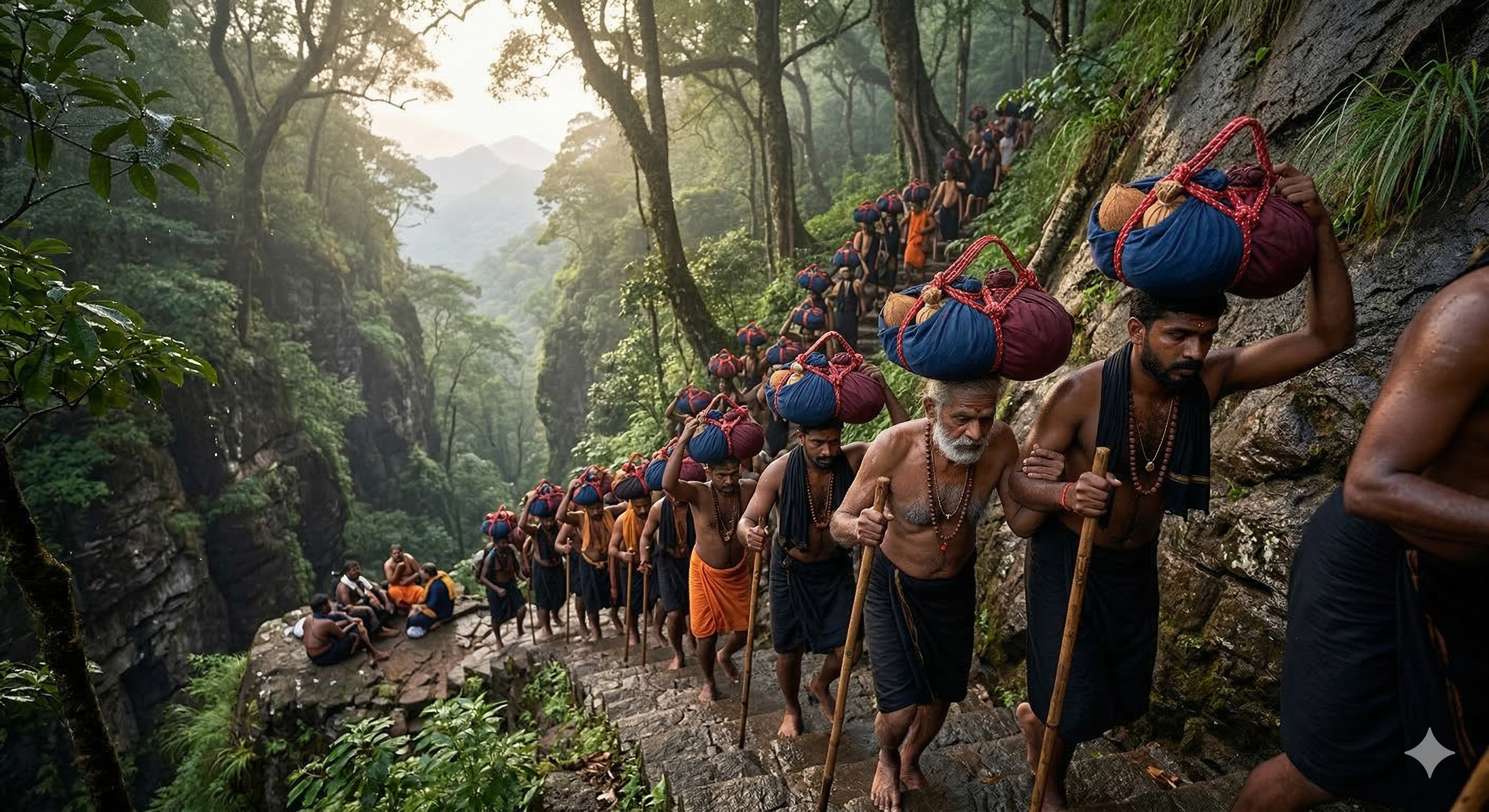
Pilgrims climbing the hill path in an orderly way

Hydrate and pace steadily

Do not save all rest for the moment of exhaustion. Drink water regularly and pace the climb according to the weakest member who must safely reach darshan.

Protect belongings

Keep phones, wallets, medicines, and documents secure. Do not hand them to unknown people who offer help casually.

Reduce confusion near the temple zones

As you approach the inner sectors, reduce phone use, keep children close, and obey the active crowd-control pattern without argument.

Care after darshan

Do not scatter immediately

Fix your post-darshan regrouping point before entering the temple-side crowd. This keeps return, prasadam pickup, and descent orderly.

Recheck the vulnerable first

After darshan, look first to elders, children, and those who have already shown fatigue before planning the next movement.

Return with the same discipline

The yatra is not finished when the darshan ends. The descent also requires patience, hydration, and group care.

Food, rest, and timing support

Annadanam and medicated water

The Emergency Services directory groups the main annadanam points at Nilakkal, Pamba, Sannidhanam, and the trekking route so families know where to pause before fatigue becomes a problem.

Viripandals and edathavalams

Use the same page for viri sheds, transit halts, and route-side resting points when children, elders, or interstate groups need a proper regrouping plan.

Daily schedule and opening dates

The framework also includes the temple routine and 2026-27 opening calendar, which helps groups decide whether to climb immediately, wait, or rest first.

Care leaders should check these first

Before leaving Nilakkal

Confirm food, restroom, rest, and transport arrangements for the weakest member of the group rather than assuming you can solve it later near Pamba.

Before starting the climb

Check hospital, police, and route-support references if anyone in the batch is already tired, diabetic, breathless, or traveling with children.

Health emergency numbers

Keep these ready in one list: 112, 108, 102, Nilakkal ambulance helpline 1298, Pamba Government Hospital 04735-203318, Sannidhanam Government Hospital 04735-202101, Sannidhanam Police Station 04735-202014, and Pamba Police Help Desk 04735-203386.

After darshan

Use the framework again for return-side food, rest, parking, and vehicle support so the journey back remains disciplined.

Open Emergency Services

Health and safety reference from the attached guide

Know the climb

The guide states that the trek from Pamba to Sannidhanam is 4 kilometres with a steep 600-metre elevation gain.

Use the first-aid network

It records that first-aid posts are placed at regular intervals on the pilgrimage routes and encourages devotees to use them early, not only in crisis.

Doctor advice for vulnerable pilgrims

Elderly pilgrims and those with heart conditions are specifically advised there to consult a doctor before undertaking the yatra.

Dolly and security support

The same guide notes that the Sabarimala Dolly Service is available from Pamba for devotees unable to walk, and that Kerala Police and paramilitary forces maintain security throughout the sector.

The shortest practical instruction

The attached guide reduces much of pilgrim care to one simple instruction: carry sufficient water, because hydration is critical on the forest trek.

For elders, children, interstate travellers, and first-timers, that basic discipline should be paired with rest, medical honesty, and willingness to seek help early rather than pushing the climb beyond one's safe capacity.

Related guidance

Use the linked pages below for the devotional and route-specific parts of the same preparation.

First-Time Pilgrim Guide Pilgrimage Route Guide

Travel, Stay and Medical Support Irumudi Preparation

Insurance & Compensation Emergency Services