Swami SharanamIrumudi Preparation Back To Home
Sacred Irumudi

Prepare the Irumudi with reverence, not guesswork

Prepare the holy Irumudi with devotion, packing the sacred offerings for the twin paths.

The Irumudi is not a travel bag. It is a sacred burden carried in surrender. Every first-time pilgrim should prepare it only under Guruswami guidance, with a prayerful mind, clean hands, and complete respect for tradition.

The exact contents can differ slightly by lineage, Guruswami practice, and temple custom. Read this page as a disciplined memory aid, not as permission to prepare the Irumudi casually or without guidance.

The anatomy of the Irumudikettu

A bundle of two knots

The Irumudikettu literally means a bundle of two knots. It is a specially designed cloth bag with two clear compartments: the Munmudi in front and the Pinmudi behind.

Cloth colour and pilgrim stage

Black or dark blue: usually associated with Kanni Swamis and first-time pilgrims.

Saffron or orange: often associated with more experienced pilgrims who have undertaken the yatra multiple times.

Spiritual meaning

The Irumudi teaches surrender and restraint. What is offered to the Lord goes ahead of the pilgrim, while personal needs remain secondary and disciplined.
The heart of the Irumudi

The Mudra Thenga, the ghee-filled coconut, is the heart of the Irumudi. The coconut symbolizes the body, and the pure ghee within is remembered as the inner consciousness. Offering that ghee at the sanctum signifies the merging of the individual soul with the divine.

Only those who observe the proper Vratham and carry the Irumudi according to custom are traditionally permitted to ascend the holy eighteen steps. For that reason, the preparation is never treated casually.

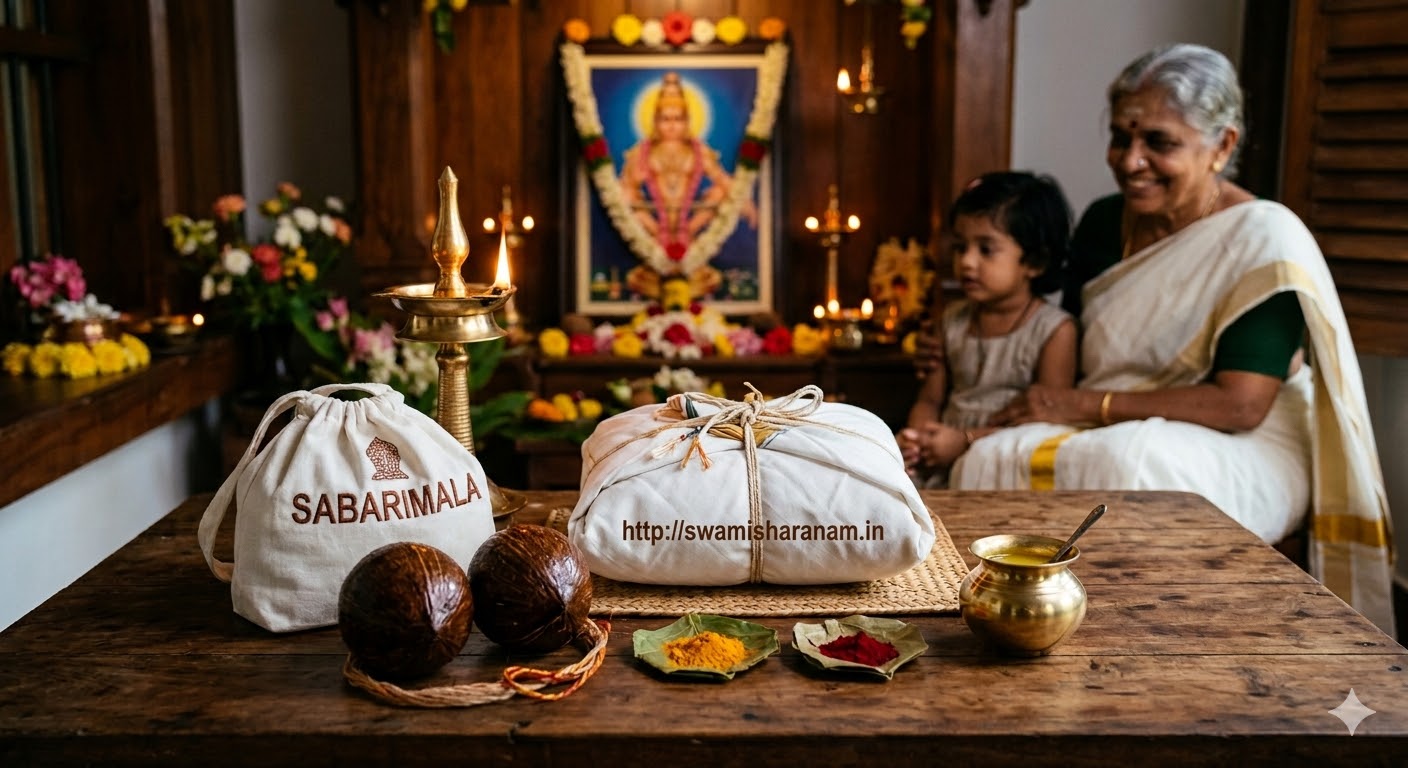
Sacred Irumudi kept ready for departure
The crowned Irumudi must remain prayerful, balanced, and ready for the climb.
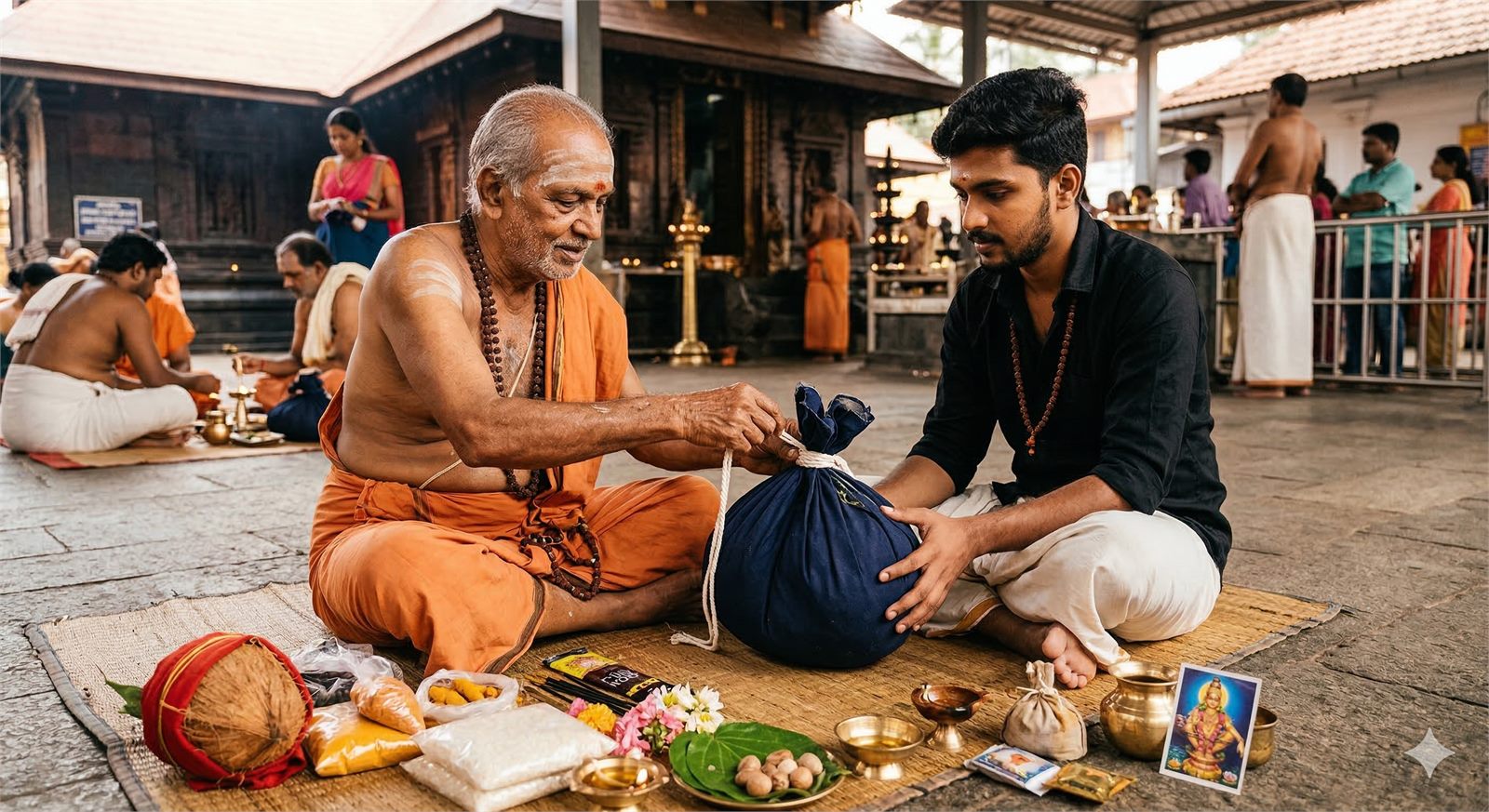
Kettunirakkal and Irumudi preparation under guidance
Kettunirakkal is completed under Guruswami guidance, never as a casual packing exercise.

1. The Munmudi

The front pouch is reserved strictly for the offerings dedicated to Lord Ayyappa and the connected deities at the Sannidhanam. Senior pilgrims often describe it as spiritually heavy and therefore deserving of the greatest care.

ItemPurposeQuantity
Mudra ThengaiThe ghee coconut for Neyyabhishekam.1 polished and cleaned coconut
Pure gheeFilled into the Mudra Thengai during Kettunira.Approx. 200 to 500 ml
Raw riceUsed as a base to seat the sacred coconut.3 to 5 handfuls
Betel leaves and nutsTraditional offering for the Lord and Guruswami.2 to 4 sets
Coins (Kanikkai)Offering at the shrine and steps.Rs. 1.25 or more
Camphor and incenseFor deeparadhana and pooja support.1 small packet each
Sandal, vibhuti, kumkumSacred powders used in connected worship.1 small packet each
Jaggery and cashewsFor panchamrutam or payasam-related offerings.Small quantities
Rose waterAbhishekam support in lineages that include it.1 small bottle

2. The Pinmudi

The back pouch traditionally carried the pilgrim's practical provisions for the forest route. In current usage it still holds the coconuts to be broken on the way, selected sub-shrine offerings, and only minimal personal necessities.

ItemPurposeQuantity
Vidalai ThengaiCoconuts to be broken at the 18 steps and other ritual points.2 to 4 coconuts
Turmeric powderOffering commonly kept for Malikappurathamma.1 packet
Blouse piece or silkOffering for the goddess.1 set
Black pepperOffering for Vavaru Swamy.1 small packet
Dry ginger and cardamomFor traditions that prepare panakam.Small quantity
Personal suppliesToiletries, small towel, or essential medicines only.Minimal
Emergency snacksBiscuits or aval for necessity, not indulgence.Optional

The Kettunirakkal ritual

The filling of the Irumudi is itself a sacred rite and is usually done at home or at a local temple under the direct guidance of a Guruswami who has undertaken the pilgrimage many times.

1. Cleaning the Mudra Thengai

One eye of the coconut is pierced, the water is drained fully, and the coconut is cleaned and left ready for the sacred filling.

2. Filling the ghee

Under the Guruswami's guidance, the devotee fills the coconut with pure ghee while chanting "Swamiye Saranam Ayyappa."

3. Sealing

The opening is corked and sealed, traditionally with wax support, so the ghee remains secure until Neyyabhishekam.

4. Packing the Munmudi

The Mudra Thengai and the principal sacred offerings are arranged first in the front pouch with order, balance, and reverence.

5. Packing the Pinmudi

The breaking coconuts, connected offerings for Malikappurathamma and Vavar, and restrained personal essentials are then placed in the back pouch.

6. The knot and departure

The Guruswami ties the center knot after both pouches are filled. Once the crowned Irumudi is placed on the head, the pilgrim leaves in a spirit of surrender and disciplined detachment.

Practical reminders before departure

These small practical checks protect the sanctity of the Irumudi by preventing avoidable confusion on the road, at check-posts, and during the first stretch of the climb.

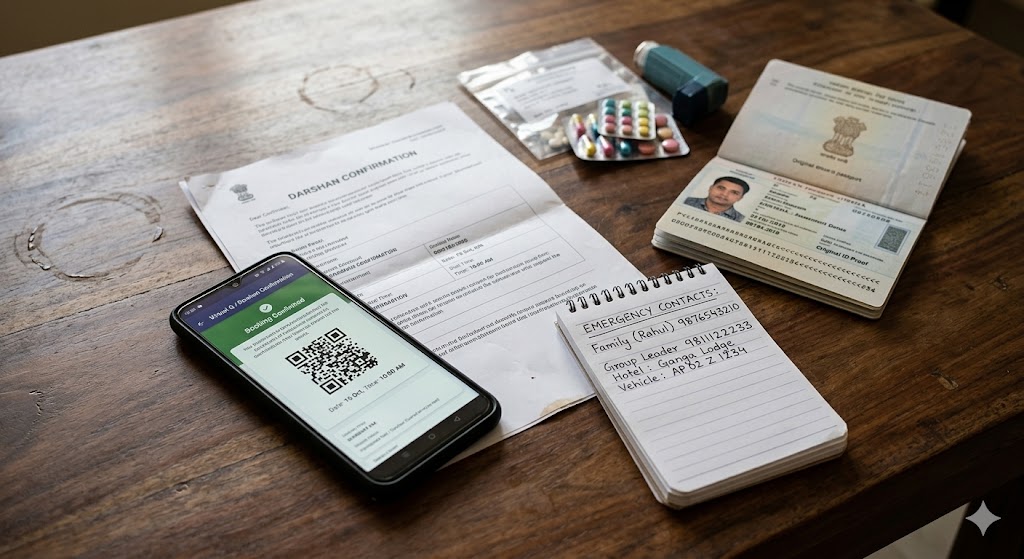
Pilgrimage documents and proof ready before departure
Keep ID, darshan proof, and emergency contacts ready before the Irumudi is crowned.
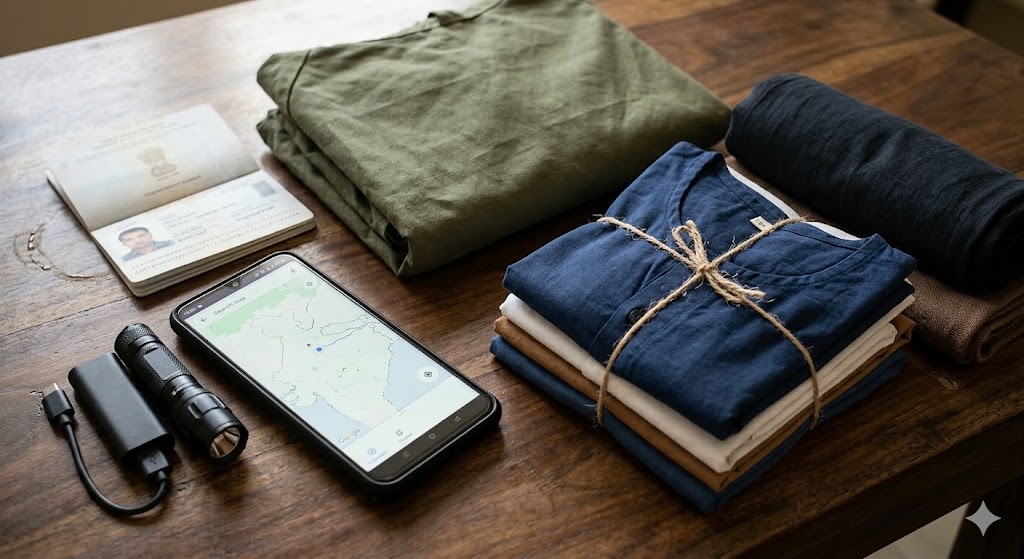
Travel basics prepared for a disciplined pilgrimage departure
Simple clothing, measured luggage, and road-readiness help the group stay disciplined from the start.

Aadhaar or ID copy

Keep a copy of your ID either in the Pinmudi or in a secure outer pocket so verification at check-posts does not disturb the yatra flow.

FASTag balance

If you are travelling by road, settle FASTag balance and vehicle basics before Kettunira so the journey is not delayed by avoidable technical issues.

Weight balance

Balance the Munmudi and Pinmudi properly so the bundle sits comfortably on the head, especially on steeper climbs such as Neelimala.

Quick checklist before Kettunira

Use this as a final memory aid before the Guruswami begins the sacred packing.

Language-wise visual guides

Use these community references to see the Kettunira sequence in the language most natural to your group. The links below open the exact channel and title searches supplied for this guide, but your Guruswami's method should always come first if any detail differs.

Malayalam (മലയാളം)

Official Irumudi Ritual Guide: A direct walkthrough of Kettu Nirakkal and Irumudi discipline for devotees.

Travancore Devaswom Board Channel: Open the official channel for more Sabarimala ritual and pilgrimage videos.

Tamil (தமிழ்)

Tamil Travel Guide: A direct Tamil video that helps devotees understand the route and preparation rhythm.

Tamil Ayyappa Background: A useful Tamil explainer for devotees who want extra visual context before departure.

Telugu (తెలుగు)

Telugu Ayyappa Video: A direct Telugu video for devotees who want the pilgrimage background in Telugu.

Official Ritual Walkthrough: Use this direct Irumudi ritual explanation alongside your Guruswami's instruction.

Kannada (ಕನ್ನಡ)

Kannada Route Guide: A direct Kannada video that helps batches understand the approach and planning.

Official Ritual Walkthrough: A clear Irumudi explanation that stays closer to temple practice.

Hindi (हिन्दी)

Official Ritual Walkthrough: A dependable direct video for Kettu Nirakkal and Irumudi discipline.

Pilgrimage Intro: A broader Sabarimala introduction for devotees who want more context before the ritual guide.

English

Thantri Ritual Explanation: A direct English-accessible ritual explanation for filling and carrying the Irumudi properly.

Official TDB Channel: Open the official channel for more temple-side and pilgrimage videos.

The attached guide's exact Irumudi reference

The guide defines the irumudi as the most sacred object carried to Sabarimala. It states clearly that no devotee may climb the 18 holy steps without the irumudi on the head, and it describes carrying it through the trek as one of the highest forms of worship.

Two sacred compartments

The front compartment carries offerings for the Lord: ghee-filled coconuts for Neyyabhishekam, camphor, betel leaves, arecanut, sandalwood paste, vibhuti, flowers, and other puja materials. The rear compartment carries personal provisions such as rice, dry items, prayer materials, and small amounts of money.

Preparing the mudra thengai

The coconut is bored, the water removed, pure ghee poured in, and the opening sealed with coconut husk and sacred ash. The guide explains that these ghee-filled coconuts are later offered for the Neyyabhishekam in the sanctum.

Packing, sanctification, and carrying discipline

Only under Guruswami guidance

The Irumudi is to be packed, consecrated, and tied only under the supervision of the Guruswami.

Never on the ground

The attached guide says the bundle must never be placed on the ground during the journey. If it has to rest, it should be placed on a raised support.

Placed on the head at Pamba

The reference text identifies Pamba as the base camp where the irumudi is crowned on the devotee's head before the climb begins in earnest.

Continuous chanting

From that point onward, the pilgrim proceeds with the chant "Swamiye Saranam Ayyappa" as a living accompaniment to the climb.

What not to do

Do not copy random lists from social media. Do not pack decorative extras just to make the Irumudi look full. Do not alter sacred order for convenience. When in doubt, ask your Guruswami and follow one instruction with full obedience.

The complete Munmudi checklist

Core deity offerings

Keep the Mudra Thenga, raw rice, betel leaves, areca nut, dakshina coins, turmeric, sandal, incense, camphor, and rose water ready under Guruswami guidance.

Ritual memory

Only the ghee coconut is finally carried forward for Neyyabhishekam at the temple. The rest of the sacred contents support the ritual journey and connected shrines.

The complete Pinmudi checklist

Offerings for the route

Puffed rice, beaten rice, jaggery, kadali banana, pepper for Vavar, and the coconuts meant for breaking at the 18 steps and other sacred points are commonly remembered here.

Minimal essentials only

Keep just one spare dhoti, small dry snacks, and the bare minimum required for the journey. The Pinmudi is not a substitute for heavy luggage.

Kettunira procedure: step by step

Step 1: Prepare the Ney-thenga

Select a strong coconut, clean it well, open one eye, drain the water completely, and allow the inside to dry before the filling ritual.

Step 2: Fill the ghee

Before a lighted lamp, fill the coconut with pure cow's ghee while chanting Swami Saranam, then seal the eye carefully with leaf, cork, or wax.

Step 3: Fill the Munmudi

The Guruswami places the Ney-thenga first, after which the family offers rice, coins, betel leaves, turmeric, and the other deity offerings.

Step 4: Fill the Pinmudi

Pepper, dry ginger, coconuts, puffed rice, jaggery, and the minimal route essentials are arranged for the journey and the secondary shrines.

Step 5: The handover

The Guruswami lifts the completed Irumudi onto the pilgrim's head. From that moment it must never be placed directly on the ground and should rest only on a cloth or wooden support.

Departure memory

The pilgrim traditionally steps out without looking back, marking detachment from worldly ties as the forest journey begins.

Quick ritual table

ItemDestination / Purpose
Ghee coconutSannidhanam Neyyabhishekam, remembered as the soul's union with the Divine.
PepperVavar Swami shrine, representing protection, friendship, and healing.
TurmericMalikappurathamma shrine and the Goddess tradition of the hill.
Puffed riceSmaller forest shrines and the long yatra tradition.

Air travel and first-timer caution

This page records the working travel advisory that, during the 2025-26 season, airlines may permit a properly sealed Irumudi as cabin baggage under the special pilgrimage relaxation in force for that season. The ghee coconut must be sealed and declared during security screening.

Wrap the Irumudi in a clear waterproof cover to prevent leakage and rain damage. Most important of all, remember this: only the ghee coconut is taken for Abhishekam. Once the ghee is offered, the empty shell is consigned to the Aazhi as the symbolic surrender of ego.