Swami SharanamPilgrimage GuideBack To Home
Guruswami Travel Guidance

Guide to your sacred Sabarimala pilgrimage

Welcome, Swami. Read this page as you would listen to an experienced Guruswami, a careful tour operator, a temple administrator, and a senior police officer all speaking together: travel with devotion, move with discipline, and reach Pamba only after your arrangements are in order.

Operational rules, darshan systems, and transport arrangements can change by season. Before final departure, always confirm the current notices published by the Travancore Devaswom Board, the Kerala government Sabarimala portal, the Virtual Q system, and KSRTC.

Open Readiness Checklist First-Time Pilgrim Guidance

Before you begin the road to Pamba

The final motorable point for ordinary pilgrims is Pamba. From there, the sacred ascent to Sannidhanam begins. If you are taking the traditional long forest path, your road planning changes and should usually conclude at Erumeli under proper guidance.

Virtual Q first: Keep your slot confirmation and original ID ready before you enter the core pilgrimage sector.
Nilakkal discipline: Private vehicle regulation, parking management, and onward movement to Pamba may be restricted according to current control orders. Do not argue with field staff; follow the live traffic and parking system in force on the day.
Plastic-free conduct: Carry only what is needed. The forest belt is sacred and ecologically sensitive.
Senior police advice: In crowds, never break queues, never hand your bags to strangers, and keep children, elders, and the medically vulnerable close to you at every stage.
Transit log: reaching Pamba base camp

Entry modeRecommended corridorUsual transit pointsPractical note
Road from North Kerala / Karnataka sideNH corridor through central KeralaKasaragod / Kannur / Kozhikode -> Thrissur -> Angamaly -> Muvattupuzha -> Kottayam -> Erumeli -> PambaBest for devotees descending from the north-western side. Start early and allow for seasonal congestion.
Road from Palakkad / Coimbatore sideCentral inland routePalakkad -> Thrissur -> Angamaly -> Kottayam / Erumeli -> PambaPopular for Tamil Nadu and Karnataka road traffic.
Road from Kumily / Idukki sideHigh range routeKumily -> Vandiperiyar -> Mundakkayam -> Erumeli -> PambaUseful for eastern entry and devotees considering connected forest-side routes.
Road from Nagercoil / Thiruvananthapuram sideSouthern routeNagercoil -> Thiruvananthapuram -> Kottarakkara -> Pathanamthitta -> PambaSteady approach from the south with direct access through Pathanamthitta district.
Road from Shenkottai sideForest corridorShenkottai -> Aryankavu -> Punalur -> Pathanamthitta -> PambaFavoured by many devotees entering from southern Tamil Nadu.

Air travel hubs

AirportApprox. distanceBest use
Cochin International AirportAbout 160 kmThe most common arrival point for interstate and overseas devotees.
Thiruvananthapuram International AirportAbout 180 kmUseful for southern arrivals and families preferring the Kottarakkara side.
Madurai / CoimbatoreLonger overland connectionStrategic for Tamil Nadu devotees depending on final road corridor.
Kannur / KozhikodeLong northern approachSuitable mainly for northern entries who will continue by central Kerala corridors.

Rail gateways

StationWhy devotees use itAdvice
ChengannurClosest major railhead for the pilgrimage sectorFor many devotees this is the most practical railway arrival point.
KottayamHelpful for Erumeli-oriented planningGood when your group wants the central route and connected traditional preparations.
Kollam / PunalurUseful for southern rail arrivalsParticularly relevant for devotees entering from the Shenkottai side.
Palakkad junctionMajor gateway from long-distance rail routesUsed by pilgrims arriving from Chennai, Bengaluru, and beyond.

Traditional pathways and district route visuals

These visual references help devotees understand the sacred geography without replacing live route confirmation. Use them to grasp the devotional flow of the traditional Erumeli pathway, the Vandiperiyar side, and the broad movement from major districts toward the Sannidhanam sector.

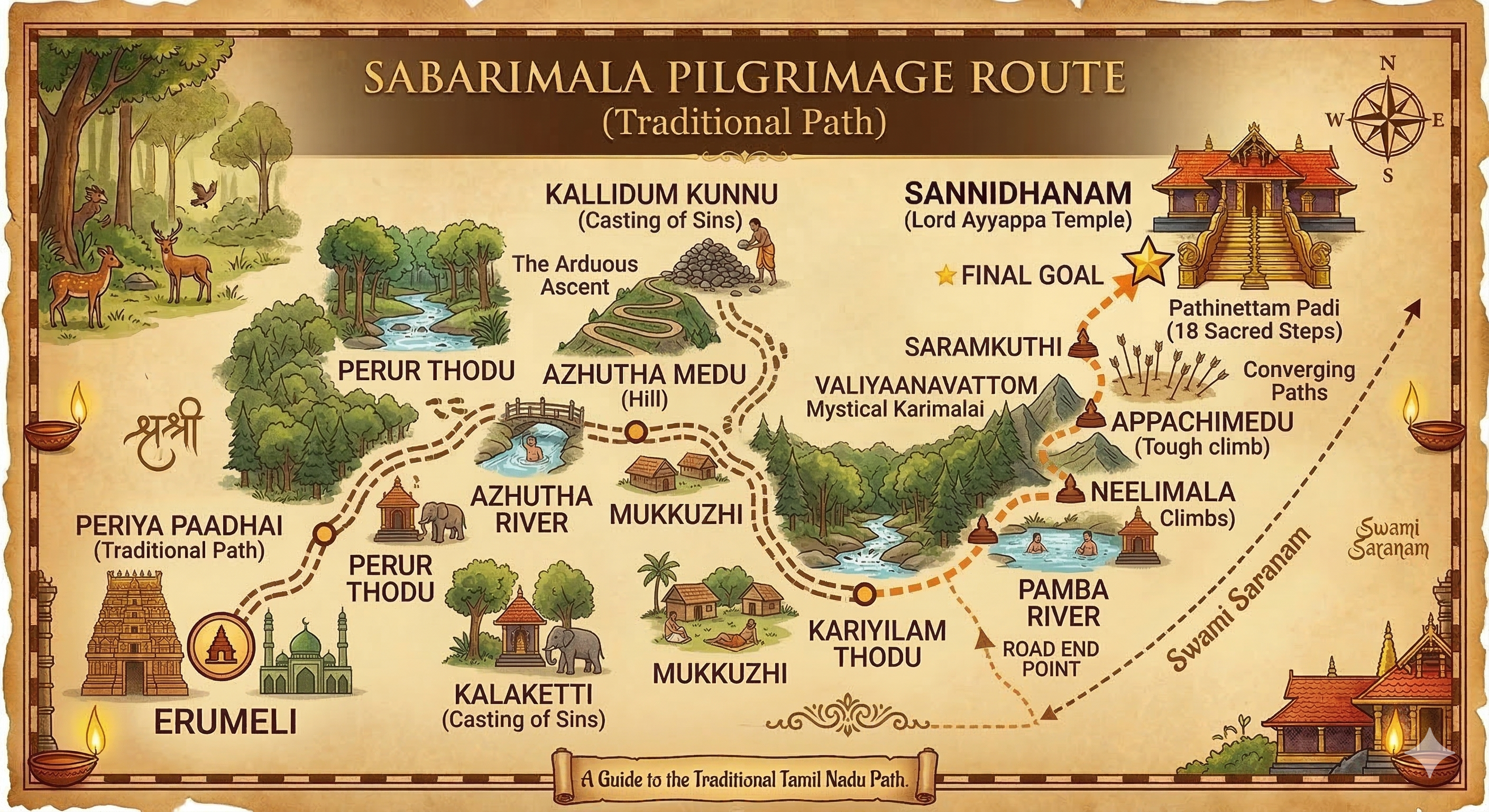
Traditional pathway from Erumeli to Sannidhanam

Traditional pathway from Erumeli

This image helps the pilgrim remember the long devotional route associated with the traditional forest-side journey.

Traditional pathway from Vandiperiyar to Sannidhanam

Vandiperiyar side approach

Useful for understanding the connected hill-side route memory on the eastern side.

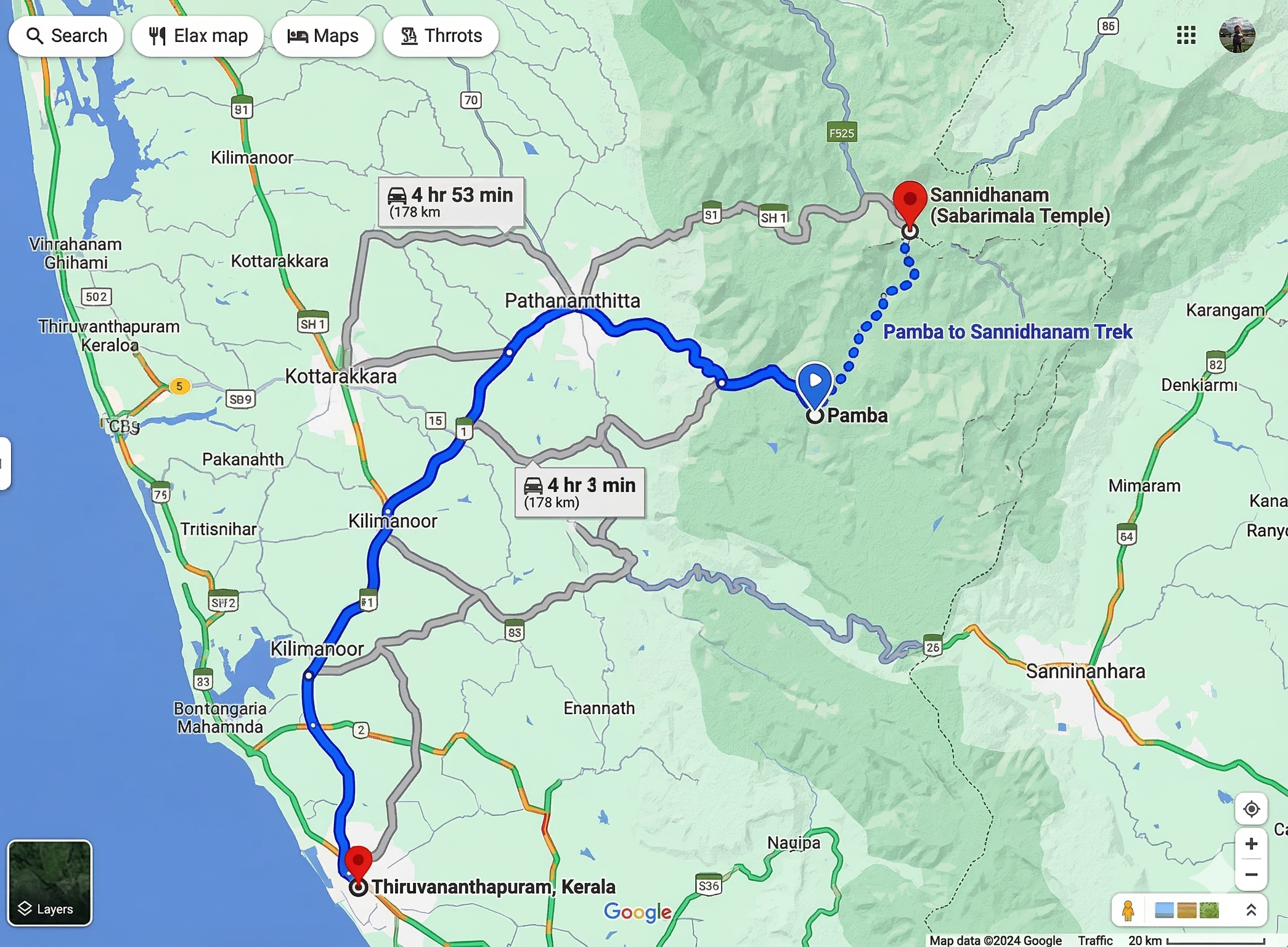
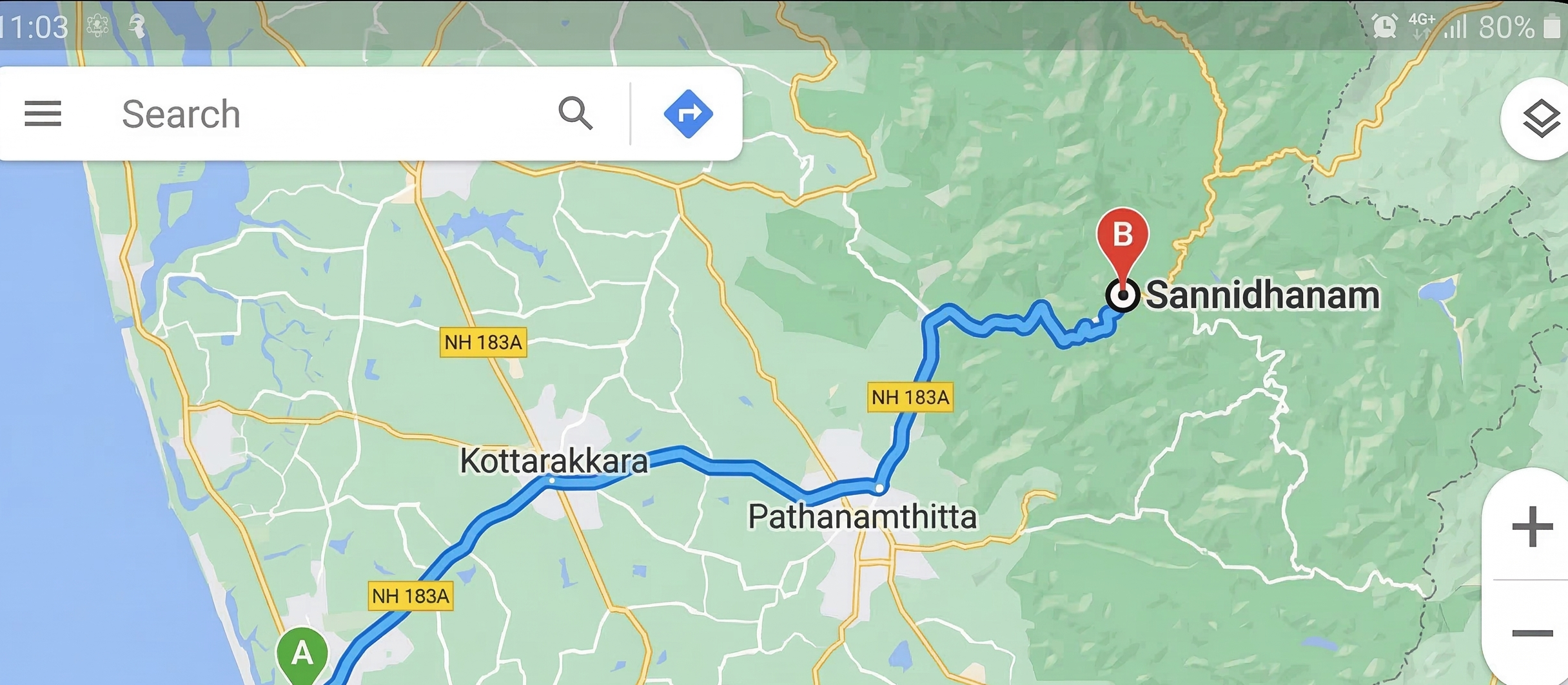
Route reference from Thiruvananthapuram to Sannidhanam

Southern district approach

This visual supports pilgrims approaching from Thiruvananthapuram and nearby southern sectors.

Route reference from Kollam to Sannidhanam

Kollam side route support

This visual is especially useful for devotees entering from Kollam and connected rail or road sectors.

Schematic route map from major Kerala districts to Sannidhanam

Major district route guide

This schematic map shows the devotional planning flow from Thiruvananthapuram, Kollam, Pathanamthitta, Alappuzha, Kottayam, Idukki, Ernakulam, Thrissur, Palakkad, Malappuram, Kozhikode, Wayanad, Kannur, and Kasaragod toward Sannidhanam.

Open the dedicated maps page

Use the full map centre for traditional pathways, district route visuals, road maps, railhead maps, air connection flow, and ship or port route support in one place.

Open Pilgrim Maps

Open travel and stay support

For railhead strategy, train guidance, KSRTC movement, accommodation, viri halls, and idathavalams, use the separate planning page.

Open Travel & Stay

Open the devotee help desk

If you want all the major pages under one roof, use the site map and help hub to move directly to the page you need.

Open Help Desk

Night-mode devotional tools

A new tools centre is now available for devotees who want a more immersive digital experience: a Virtual Vratham tracker, Punya Darshanam visual tour, Tathvamasi step explorer, Sharanam chant companion, satsang board, eco pledge, and simple forest-path download support.

Open Devotional Tools

Sea arrivals and connected road movement

Some devotees arrive through Kochi, Alappuzha, or southern port sectors. In such cases, the pilgrimage still becomes a road journey after landing. Connect through the central Kerala roads toward Kottayam, Pathanamthitta, Erumeli, Nilakkal, and Pamba according to your route plan and the latest traffic instructions.

My advice as an administrator is simple: do not improvise the final stretch after a port arrival. Arrange your onward vehicle, rest, food, and documents before the hill approach begins.

KSRTC, parking, and field discipline

During peak periods, the Nilakkal-Pamba shuttle system and chain service arrangements become the backbone of pilgrim movement. Respect the deployed staff, stand in your assigned lines, and avoid carrying unnecessary luggage into the shuttle zone.

As a senior police officer would say: the safest pilgrim is the one who listens once, moves calmly, and keeps his group together.

Families and children

Children, Balaswamis, and Malikappurams must be closely supervised at Pamba, queue complexes, and rest points. Keep guardian names, mobile numbers, and lodging details written and stored safely even if the child is wearing a digital band or tag.

Women devotees

Customs, legal directions, and administrative procedures can be sensitive and may change. Follow only the current instructions issued through official channels and local field control, and avoid relying on rumor or social media debate while travelling.

International and interstate devotees

Keep passport copies, insurance, local communication arrangements, cash backup, and a clear route plan. Network quality can fluctuate in hill sectors, so do not depend on mobile data alone.

Know before you step onto the trek

Health: If you have heart, respiratory, or mobility issues, consult your doctor before travel and use the medical support points without hesitation.
Hydration: Drink water and move steadily. Do not compete on the hill path.
Documents: Keep ID, darshan confirmation, and emergency contacts in a waterproof pouch.
Eco conduct: No littering, no plastic dumping, no discarding clothes into Pamba, and no disturbance to the forest belt.

Peaceful darshan advice

Heavy rush is common during Mandala and Makaravilakku days. Elderly devotees, families with children, and travellers from outside Kerala often find the monthly pooja windows more manageable. Even then, confirm the current opening schedule before finalising travel.

Read First-Time Pilgrim Guidance