Swami SharanamHoly Steps & Shrine Back To Home
Temple Reference

18 Holy Steps, rituals, offerings, and temple deities

This page gathers devotional reference notes on the Pathinettampadi, Kettunirakkal, offerings, and important sannidhi points at Sabarimala.

The 18 Holy Steps

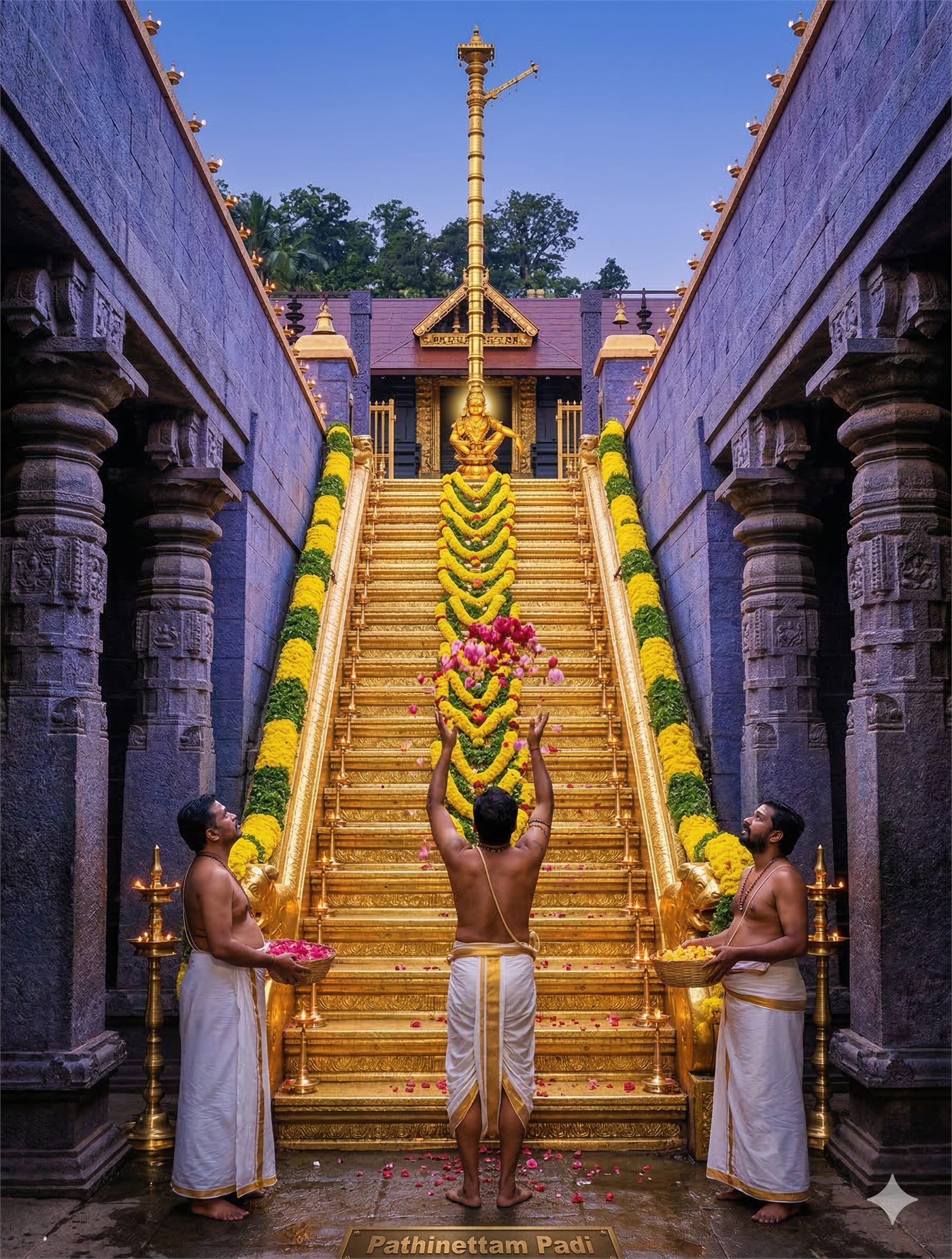
The 18 holy steps, revered as the Pathinettampadi, hold a deeply sacred place in Sabarimala devotion. Only those who carry the Irumudi kettu on the head are traditionally permitted to ascend these steps.

The steps are approached with reverence, restraint, and great emotional seriousness. They are not merely architectural steps, but symbols of purification and eligibility earned through austerity.

The 18 holy steps of Sabarimala

Kettunirakkal and the Irumudi

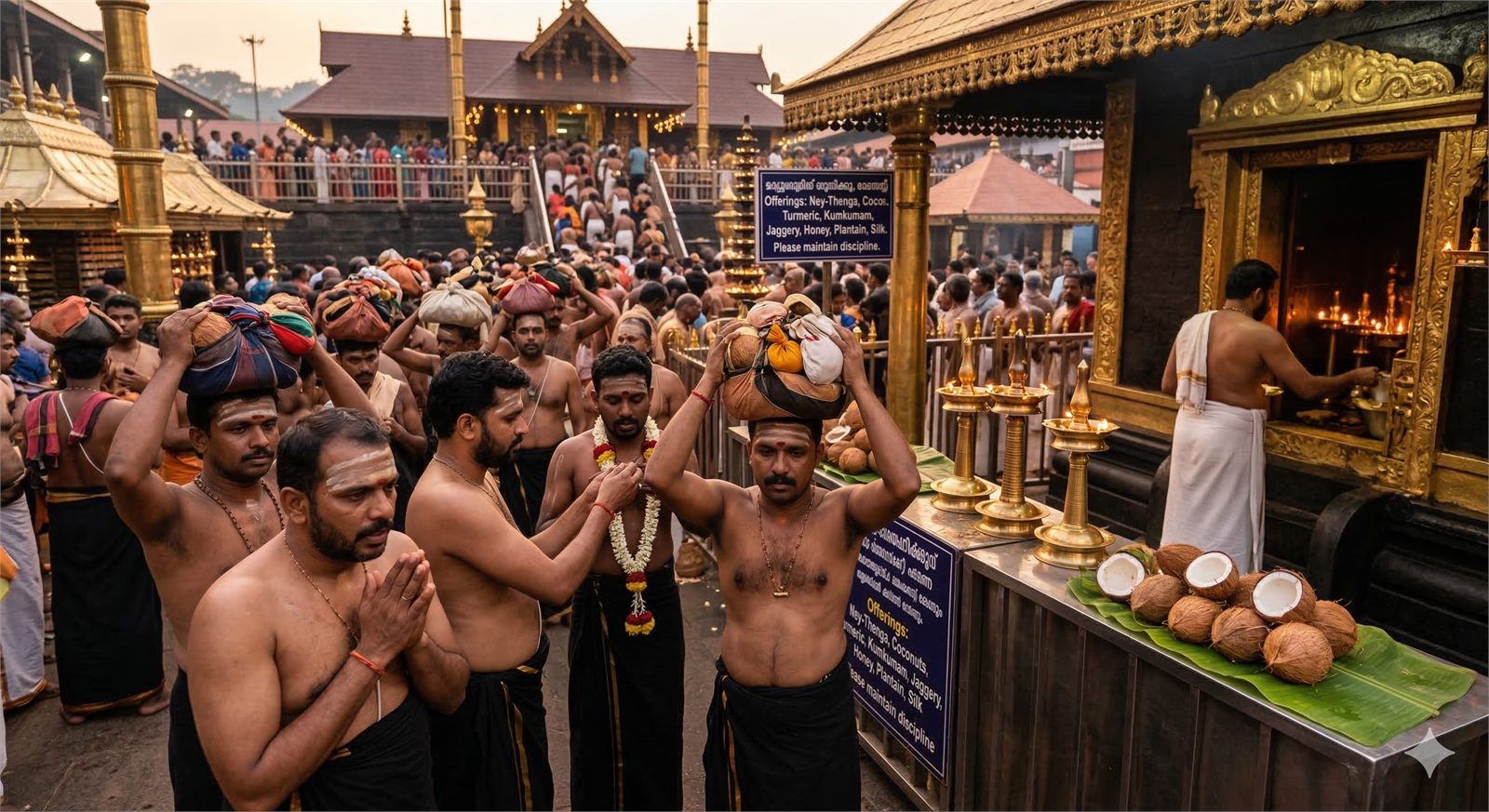
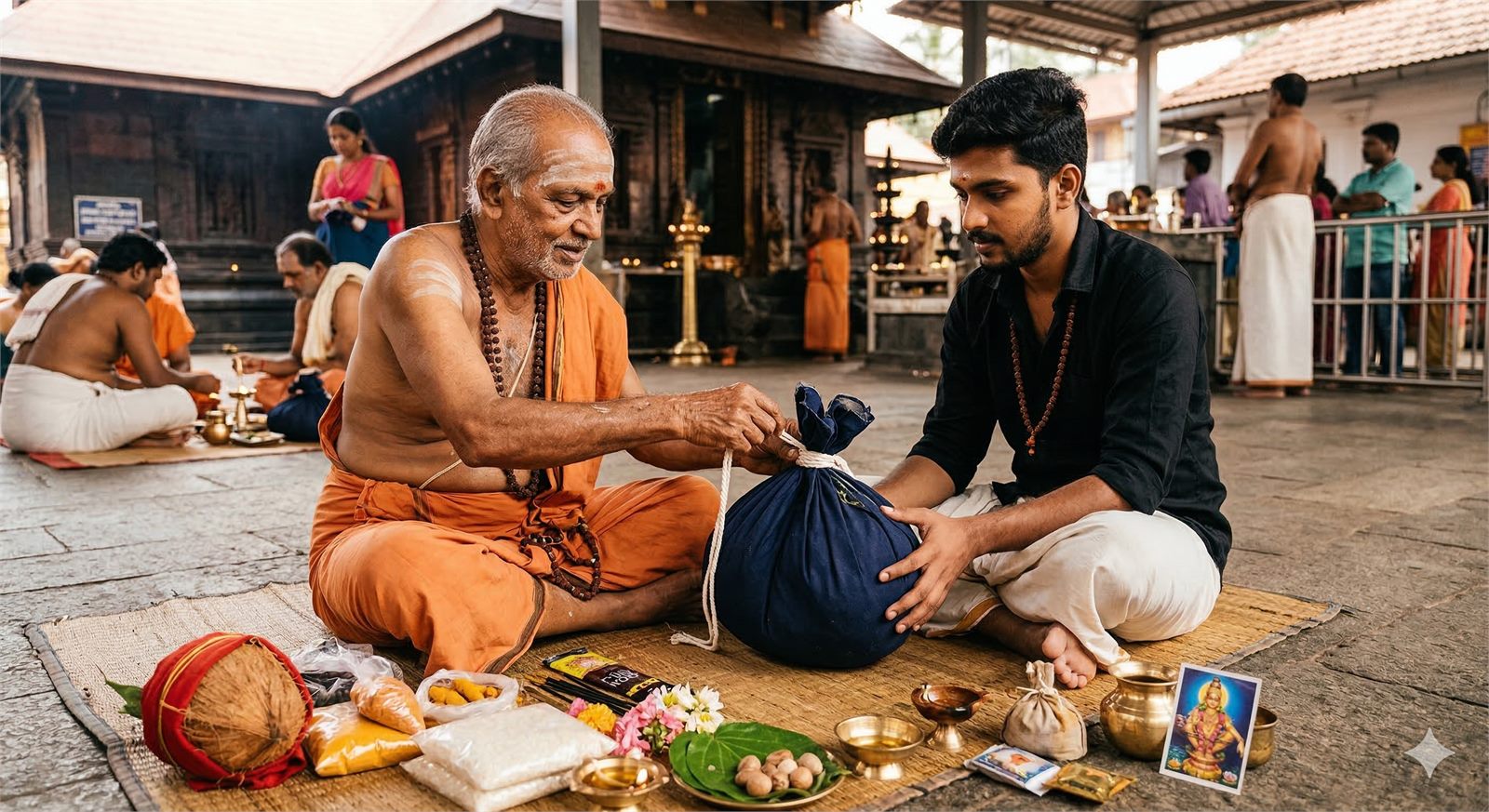
Kettunirakkal is the preparation and packing of the Irumudi kettu under the guidance of a guru swami. The ritual begins with prayer, and the sacred ghee offering is filled into the coconut after the water is drained through a small opening.

This ghee-filled coconut, called the ney-thenga, symbolizes removing worldly attachment and filling the heart with spiritual aspiration. The front compartment carries the ney-thenga and other sacred offerings, while the other compartment carries coconuts and items needed on the journey.

Kettunirakkal and the Irumudi preparation

The sacred Pathinettampadi: rules and etiquette

For many Kanni Swamis, crossing the gold-plated Pathinettampadi becomes the most emotional and spiritually charged moment of the entire pilgrimage. Because these steps are treated with sanctity equal to the inner shrine, the outer discipline and the inner attitude both matter deeply.

Related guidance: move from the First-Timer Guide to Safety & Emergency and then to the Sannidhanam guide if you want step etiquette, crowd awareness, and shrine approach details together.

1. The absolute requirement: the Irumudikettu

No Irumudi, no entry: only devotees actively carrying the sacred Irumudikettu on the head may climb the 18 steps.

Alternative route: devotees without the Irumudi must use the designated northern entrance, often referred to as Vadakke Nada, to reach the sanctum for darshan.

2. The 41-day Vratham

The privilege of ascending the steps is traditionally earned through the Mandala Vratham: celibacy, satvik food, abstinence from alcohol and tobacco, and disciplined personal restraint.

The devotee comes to the steps after shedding vanity and softening the ego through prayerful discipline.

3. The coconut breaking ritual

Before the first step, a specific coconut is broken on the designated stone at the base of the stairs.

This act symbolizes the shattering of the ego before approaching Lord Ayyappa.

4. Posture, chanting, and descending

While ascending, the devotee should move with reverence while chanting "Swamiye Saranam Ayyappa."

While descending, tradition requires that the devotee not turn the back to the sanctum. The return movement is commonly done backward or sideways, and a second coconut may be broken during descent.

5. Strict ban on photography

The Kerala High Court has issued strict directions prohibiting photography, videography, and mobile phone use on the Pathinettampadi and in the surrounding Thirumuttam.

Phones should remain packed away. Photo-taking here is treated not only as disturbance, but as a violation of the shrine's sanctity and crowd discipline.

6. Mental etiquette

True etiquette is not only physical obedience. It is also an inward understanding that the devotee is walking over symbols of attachment, vice, and ignorance that must be surrendered at the feet of the Lord.

The deeper symbolism of the 18 steps

For connected devotional reading, continue to the Ayyappa philosophy page and the relevant teachings for devotees page after this symbolic overview.

Steps 1 to 5

Panchendriyas: conquest of the five senses: sight, hearing, smell, taste, and touch.

Steps 6 to 13

Ashtaragas: surrender of lust, anger, greed, attachment, pride, unhealthy rivalry, jealousy, and boastfulness.

Steps 14 to 16

Thrigunas: rising above Sattva, Rajas, and Tamas as binding forces of nature.

Steps 17 to 18

Vidya and Avidya: transcending both worldly knowledge and ignorance to approach spiritual clarity.

Important rituals and offerings at Sabarimala

Important rituals and offerings

The Sabarimala pilgrimage is shaped by Vratham, Maalayidal, Kettunirakkal, chanting, ghee offering, darshan discipline, pooja attendance, and reverent conduct.

Main offerings at different sannidhis may include ney-thenga, coconuts, turmeric, kumkumam, jaggery, honey, plantain, and silk according to the deity and custom.

Temple deities and upadevathas at Sabarimala

Temple deities and upadevathas

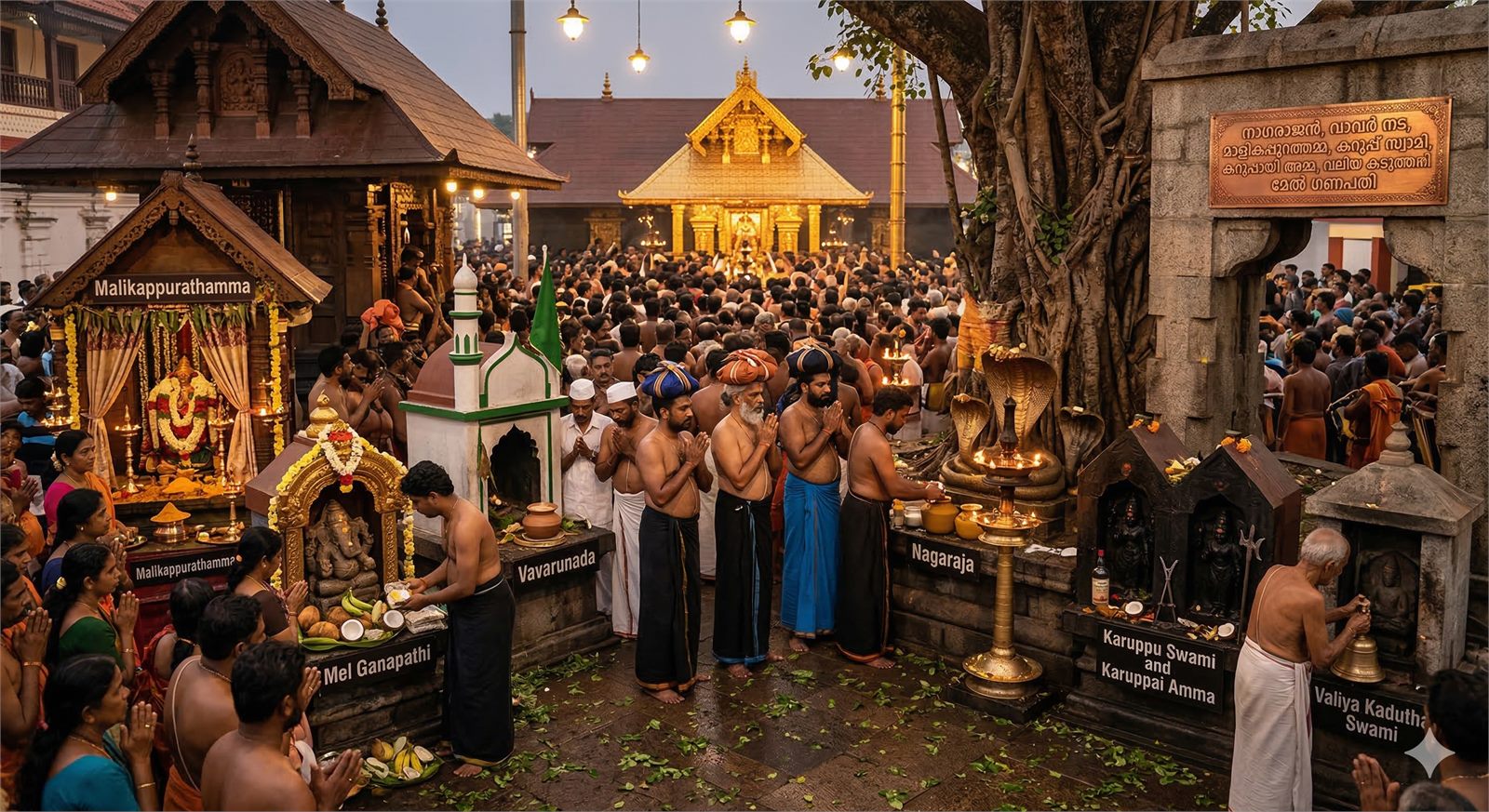
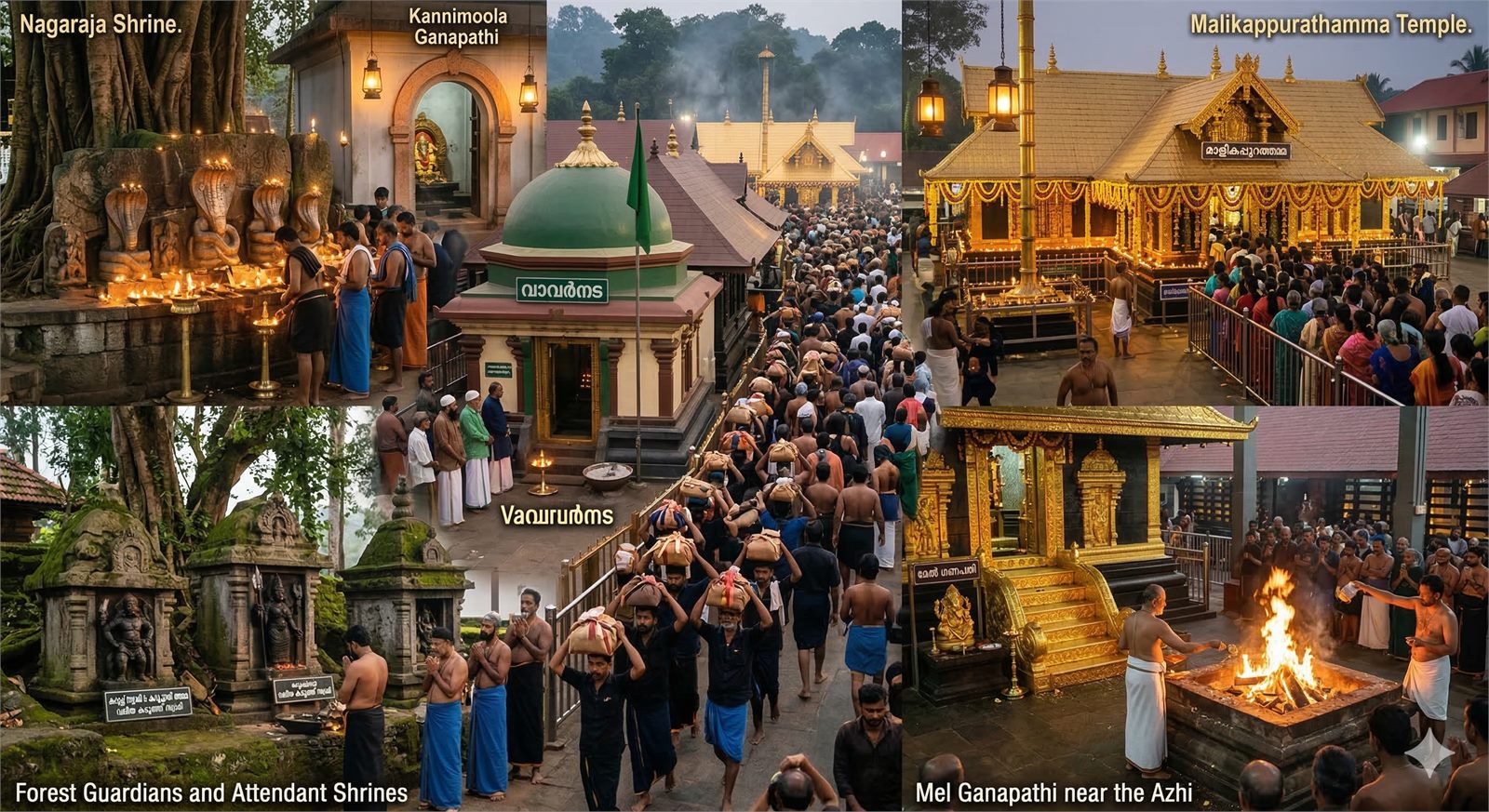
Lord Ayyappa stands at the heart of the pilgrimage, but the temple atmosphere is also enriched by Nagaraja, Vavarunada, Malikappurathamma, the Manimandapam, Karuppu Swami, Karuppai Amma, Valiya Kadutha Swami, and Mel Ganapathi.

These presences deepen the devotional fullness of the temple experience and are approached with their own offerings, prayers, and inner etiquette.

From Pamba snanam to Neyyabhishekam

If you want the connected order of Pamba Triveni, Ganapathy darshan, Sabari Peetam, Saramkuthi, the 18 steps, Malikappuram, and Vavar Swamy on one page, use the focused Pamba-to-Sannidhanam landmarks guide.

Need climb assistance?

For elderly devotees, medically vulnerable pilgrims, or families needing help with the ascent, the official prepaid dolly service guide now keeps the TDB rates, counters, and safety rules separate from the shrine-ritual reading.

Pilgrim season pooja and offering reference

Neyyabhishekam is regarded as the most important offering to Lord Ayyappa. The ghee-filled coconut is carried by pilgrims, gathered on the viri under the guidance of the Guruswami, and the ghee is offered at the sreekovil after the coconuts are broken and collected.

The ghee returned after the offering is received as divine prasadam. The ghee symbolizes the jeevatma merging into the paramatma, while the emptied coconut symbolizes the mortal body and is offered into the azhi in front of the temple.

Padi Pooja is the worship of the 18 holy steps, held on select evenings after Pushpabhishekam. The Tantri decorates the Pathinettampadi with flowers and silk cloth, lights lamps on every step, and concludes the hour-long ritual with aarathi.

Udayasthamana Pooja literally means worship from sunrise to sunset. It extends from Nirmalyam to Athazha Pooja and includes the nithya pooja cycle along with special archanas and abhishekams.

Pushpabhishekam is the showering of flowers and sacred leaves such as lotus, chrysanthemum, arali, tulsi, jasmine, and bilva on Lord Ayyappa. Advance booking is usually required, and the offering is traditionally associated with a cost reference of Rs.10,000.

Ashtabhishekam uses eight sacred materials: vibhuti, milk, honey, panchamrutam, tender coconut water, sandalwood, rosewater, and water. Kalabhabhishekam is performed for the strengthening of the deity's chaithanya, with the sandal paste procession and concluding kalasa abhishekam taking place around the Ucha Pooja cycle.

Laksharchana is the group chanting of the divine name one lakh times in mantra form. The Brahmakalasam of Laksharchana is later taken in procession to the sanctum sanctorum for abhishekam before Uchapooja.

Kalasams and annual ritual notes

Sahasrakalasam is offered to Hariharaputhra as per Thantric Veda and Agama traditions to invoke blessings for the welfare of humanity. Sacred ingredients, incense, precious stones, the seven seas, and holy rivers are symbolically invoked into the kalasams of gold, silver, copper, and other metals.

Ulsavabali begins with the sounding of Paani, inviting the Bhoothaganams associated with the presiding deity. The ritual continues with Ulsava Bali Thooval, the sprinkling of cooked raw rice over the balikallu around the Naalambalam and Balikkalpura, followed by the ceremonial bringing out of the Thidambu for devotees to offer prayers.

These references are especially connected with the annual temple festival and Mandala-Makaravilakku observances. For the live season order, the Tantri and temple administration schedule should always be treated as final.
The complete Sannidhanam sub-shrine checklist

Completing the pilgrimage usually means continuing through the connected sannidhi points after the main darshan. This sequence keeps the temple visit disciplined, practical, and spiritually complete for families, batch leaders, and first-time devotees.

1. Ganapathi and Nagaraja near the 18 steps

Location: south-west corner of the main Sannidhanam.

Ritual: offer namaskar and, where customary, break a coconut to remove obstacles before or after the main darshan depending on crowd flow.

Offering: coconut, appam, or modakam.

2. Malikappurathamma temple

Location: hillock north of the main temple.

Ritual: Thenga Uruttu and prayer for family welfare, marriage blessings, and grace.

Offering: turmeric powder, kumkumam, silk cloth, and bangles.

3. Manimandapam

Location: adjacent to Malikappuram.

Ritual: spend a minute in silence and, if you have completed a vow, offer a brass bell as nercha.

Offering: fulfilled-vow bell and silent meditation.

4. Vavarunada

Location: eastern side near the Sannidhanam.

Ritual: pray in the spirit of harmony and remember the spiritual bond between Ayyappa and Vavar.

Offering: black pepper, incense, and green gram.

5. Kadutha Swamy and Karuppa Swamy

Location: at the foot of the Pathinettampadi.

Ritual: brief prayer as the guardian deities and sentinels of the sacred steps.

Offering: folded-hand reverence and quick disciplined prayer.

6. Nagaraja and Nagayakshi near Malikappuram

Location: within the Malikappuram-side shrine cluster.

Ritual: prayer for lineage well-being and relief from serpent-related dosha concerns where devotees observe that custom.

Offering: turmeric powder.

Quick tips for sub-shrine movement

Coconut logic

Carry extra coconuts in the Irumudi for Ganapathi offerings and the Malikappuram Thenga Uruttu so the group is not searching for items after the main darshan.

Manimandapam timing

During the Makaravilakku phase, evening time near the Manimandapam can be especially meaningful because of the connected ritual atmosphere and processional movement.

The Vavar connection

If your group has already visited the Vavar mosque at Erumeli, the visit to Vavarunada near the Sannidhanam completes that spiritual remembrance.

Summary offering table

ShrinePrimary offeringPurpose
GanapathiCoconut / appamRemoval of obstacles.
MalikappuramTurmeric / coconutsFamily prosperity and marriage blessings.
ManimandapamBrass bellFulfilled vow and meditative remembrance.
VavarunadaBlack pepperHealth, harmony, and gratitude.
NagarajaTurmeric powderLineage well-being and serpent-shrine prayer.

Important upadevathas

Nagaraja is worshipped after darshan of Lord Ayyappa and Kannimoola Ganapathi.

Vavarunada remembers Vavaruswami, the Muslim saint and devotee of Ayyappa, and stands as a symbol of harmony and equality among faiths.

Malikappurathamma is one of the most important upadevathas of Sabarimala and is worshipped by many pilgrims as Adiparasakthi.

Manimandapam is not a deity shrine in the ordinary sense, but a sacred meditation seat remembered as the still center of the Lord's inner mission beside Malikappuram.

Karuppu Swami and Karuppai Amma are remembered as forest guardians who helped Lord Ayyappa in his divine mission.

Valiya Kadutha Swami is revered as an attendant of Lord Ayyappa.

Mel Ganapathi is worshipped near the sreekovil, and part of the broken ghee coconut is traditionally offered in the azhi.

Important upadevathas connected with the Sabarimala temple

How this page connects with the rest of the site

Read this page together with the Irumudi preparation guide, the Manimandapam guide, the first-time pilgrim guidance, and the deeper Sannidhanam path references so the temple rules, the inner symbolism, and the physical approach all remain connected.